Amarkantak Travel Guide: A Journey to the Sacred Source of the Narmada
Nestled in the tranquil hills of Madhya Pradesh, Amarkantak is a destination where dense forests, sacred rivers, ancient temples, and quiet spirituality come together in perfect harmony. Often called the Tirtharaj—the King of Pilgrimage—this lesser-explored town offers a deeply enriching experience for travellers seeking both natural beauty and cultural depth.
Reaching Amarkantak: A Scenic Beginning
The journey to Amarkantak began with an overnight train ride to Bilaspur, followed by a road journey through lush monsoon landscapes. Though the originally planned route through Achanakmar Wildlife Sanctuary was closed, the alternate drive via Ratanpur proved equally rewarding. Rolling hills, thick greenery, village life, and fresh monsoon air made the drive a visual delight. A simple breakfast stop at a roadside village shop added a local flavour to the journey.
Arrival and Stay
Amarkantak was reached by early afternoon. Accommodation was at the MPT Holiday Homes, a peaceful property overlooking a serene lake. After settling in and enjoying a traditional lunch, the exploration of this sacred town began.
Narmada Udgam: Source of a Sacred River
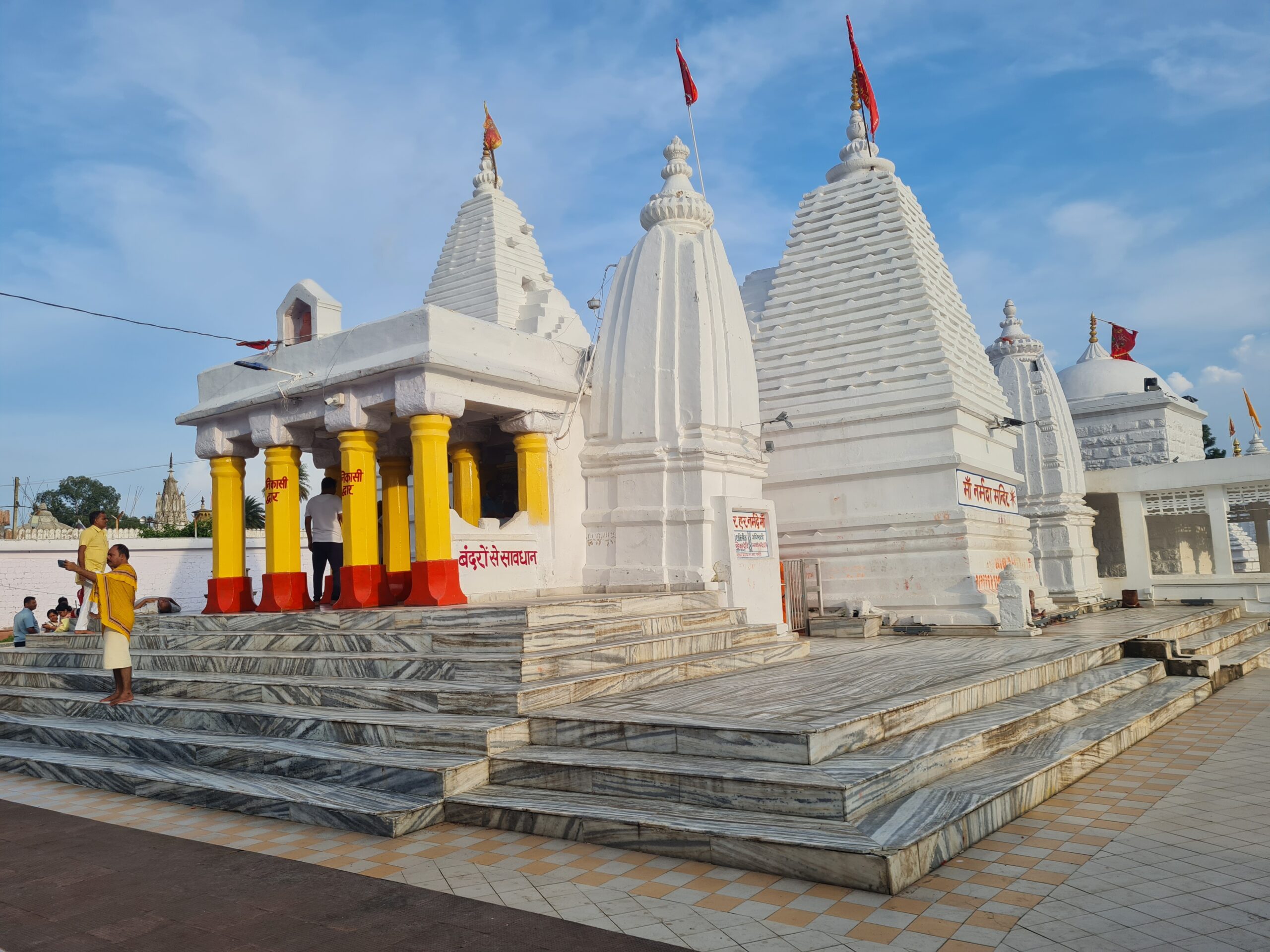
The first visit was to the Narmada Temple complex, the revered source of the Narmada River. The complex is a vast and serene space with multiple whitewashed shrines surrounding a sacred water body known as Narmada Kund. According to Hindu mythology, the river emerged from Lord Shiva and is considered second in sanctity only to the Ganges.
The atmosphere here is deeply tranquil—temple bells, flowing water, and devotional chants blend seamlessly. The evening aarti is especially moving, as lamps illuminate the temple against the twilight sky, creating an unforgettable spiritual experience.
Kalachuri Group of Temples: Echoes of the Past
The following morning began with a short walk to the Kalachuri Temple Complex, a protected monument maintained by the Archaeological Survey of India. Built between the 10th and 12th centuries by the Kalachuri kings, the complex includes several ancient shrines such as the Pataleshwar, Vishnu, Shiva, and Johila temples, along with the unique Pancha Math Temple.
The beautifully landscaped gardens contrast with the age-old stone structures, though the shrines themselves are no longer active places of worship. Despite limited access, the historical and architectural significance of the complex makes it an essential visit.
Shankaracharya Ashram and Spiritual Lineage
Behind the ancient temples lies the Shri Shankaracharya Ashram, dedicated to Rajrajeshwari Maha Tripura Sundari. The ashram maintains a calm, austere environment and offers modest accommodation for pilgrims, reinforcing Amarkantak’s long association with spiritual scholarship and ascetic traditions.
Exploring the Sacred Landscape
The journey continued to Mai ki Bagiya (Charanotdak Kund), a forested site associated with local legends of Goddess Narmada. From there, a scenic drive through dense sal forests led to Sonmuda, the origin point of the Sonbhadra River. Here, two ponds—Sona and Bhadra—merge before plunging down a dramatic 300-foot waterfall.
Nearby stands the Sonakshi Shaktipeeth, one of the 51 Shakti Peethas, set against the stunning backdrop of the Satpura ranges. The combination of mythology, natural beauty, and dramatic terrain makes Sonmuda one of the most striking sites in Amarkantak.
Shri Yantra Mandir: Architecture and Symbolism
Another remarkable site is the Shri Yantra Mandir, a temple designed as a three-dimensional projection of the Sri Yantra, central to Sri Vidya worship. Believed to have originated during the Kalachuri period, the temple’s construction continues even today, with work carried out only during the auspicious Guru Pushya Nakshatra.
Though the inner sanctum was closed during the visit, the surrounding landscape—dense forests, a tranquil water body, and the nearby Tripura Sundari Temple—made the visit deeply fulfilling.
Ramakrishna Kutir: Quiet Contemplation
Tucked away amidst greenery, Ramakrishna Kutir offers a space for reflection and meditation. Simple architecture, portraits of Ramakrishna Paramahamsa, Sarada Devi, and Swami Vivekananda, and a peaceful atmosphere define this spiritually significant retreat.
Kapil Dhara: Nature’s Grandeur
A visit to Kapil Dhara Waterfall, formed by the Narmada cascading down nearly 100 feet, showcased Amarkantak’s natural splendour. Surrounded by thick forests, the misty views and flowing waters create a serene yet powerful landscape. The site is also associated with Sage Kapila, who is believed to have meditated here.
Jain Heritage and Evening Aarti
In the evening, the Shri Sarvodaya Digambar Jain Temple was visited. Spread across four acres, the temple houses one of the world’s largest idols of Bhagwan Adinatha. Constructed using pink sandstone from Rajasthan, the scale and craftsmanship of the temple are truly impressive.
The day concluded with another visit to the Narmada Temple, where participating in the evening aarti offered a profound sense of calm and gratitude.
Final Day: Temples Beyond Amarkantak
Before departing, the journey extended beyond Amarkantak along the scenic Amarkantak–Pendra road. Stops included:
- Amareshwar Temple, home to a massive Shiva Lingam and replicas of all twelve Jyotirlingas
- Jwaleshwar Mahadev Temple, associated with the legend of Tripurasura
- Annapurna Temple, where simple temple food added warmth to the journey
On the return to Bilaspur, a final stop was made at the Mahamaya Temple in Ratanpur, one of the Shakti Peethas. Receiving a blue lotus as prasad became a symbolic and memorable conclusion to the pilgrimage.
A Journey to Remember
Amarkantak is more than a destination—it is an experience where forests whisper ancient stories, rivers carry sacred legends, and time slows down. The seamless coexistence of spirituality and nature makes it a place worth revisiting, whether one seeks reflection, history, or quiet exploration.
As the return journey began from Bilaspur, the memories carried along were of misty hills, sacred waters, ancient stones, and a timeless sense of peace—reminders of a land where devotion and natural beauty flow together, just like the Narmada herself.